They may be small dogs, but Shelties have a lot going on in the brains department, which makes them sensitive, intense, and wonderfully easy to train if you understand how they tick.
Our boys, Howard and Piper, were purebred English-type Shelties, so a little smaller and lighter than many American lines. Despite being half-brothers, they were chalk and cheese: Howard was the bold, food-driven boss; Piper was the shy, sensitive baby who lived for affection. Living with them taught me far more about Shelties than any breed book ever could. Here are 10 things I think you should know about Shelties, from the messy, joyful, real-life side of things.
1. Shelties Aren't Just Mini Lassies with Attitude
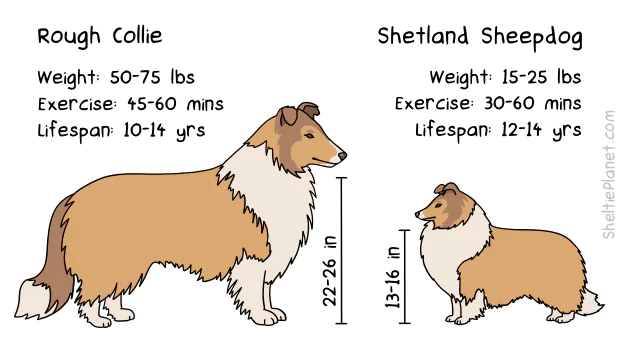
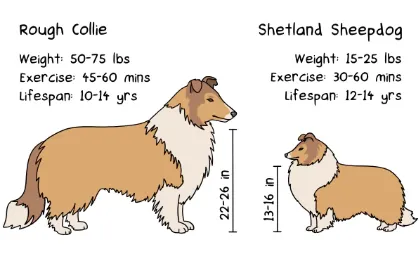
The Rough Collie is a famous dog breed made popular by Lassie, so it's no surprise that as their similar-looking cousins, Shelties are frequently accused of being Mini Lassies. But while they look like pocket-sized Collies, the Sheltie breed history tells a different story. Unlike Miniature Poodles, which came from breeding smaller and smaller Poodles together, Shelties trace their roots back to Scandinavian Spitz-type dogs brought to the Shetland Islands in the 1700s.
Over the next 200 years, those little farm dogs (then called "Toonies") were crossed with Pomeranians, Papillons, Corgis, Border Collies, and, yes, Rough Collies. The elegant, long-nosed, long-coated look was refined on purpose. So today Shelties resemble mini Lassies, but under the fluff they're their own breed: quick, sharp, herding dogs with big opinions in small bodies.
With their long fur and long noses, Howard and Piper definitely had the Collie elegance, but their personalities were very Sheltie: fast, loud, and eccentric. If you're expecting a calm, ornamental version of Lassie, you may be surprised. Shelties are energetic working dogs who just happen to fit on your lap.

2. Shelties Are Small Dogs... But Not Tiny Or Fragile
Purebred American Shelties are developed to be 13–16 inches (33–41cm) at the shoulder and weigh 15–25 pounds (7–11kg). Having such a specific breed standard helps keep Shelties recognisable as a breed, generation after generation, instead of drifting into mystery fluffy collie-ish dog territory. If you're curious about how exacting that blueprint is, take a look at the Sheltie breed standard.
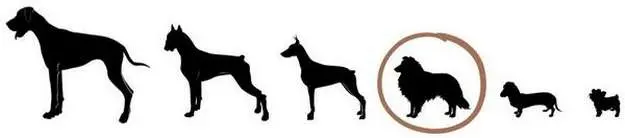
Howard and Piper were English-type Shelties, so on the smaller side of their American relatives. They were compact enough to curl up on a chair, but sturdy enough to bounce off your shins at full speed while playing zoomies. Think of them as small herding dogs rather than delicate toy dogs. They fit comfortably in city homes and hatchbacks, but there's nothing fragile about the way Shelties launch themselves at life.
3. Shelties Are Double Coated and Your House Will Know It
Shelties have a classic double coat: a soft, woolly undercoat for insulation and a coarse outer coat for weather-proofing. It's the dog equivalent of a puffer jacket under a raincoat. It looks beautiful in the wind and drifts gently into every corner of your home.
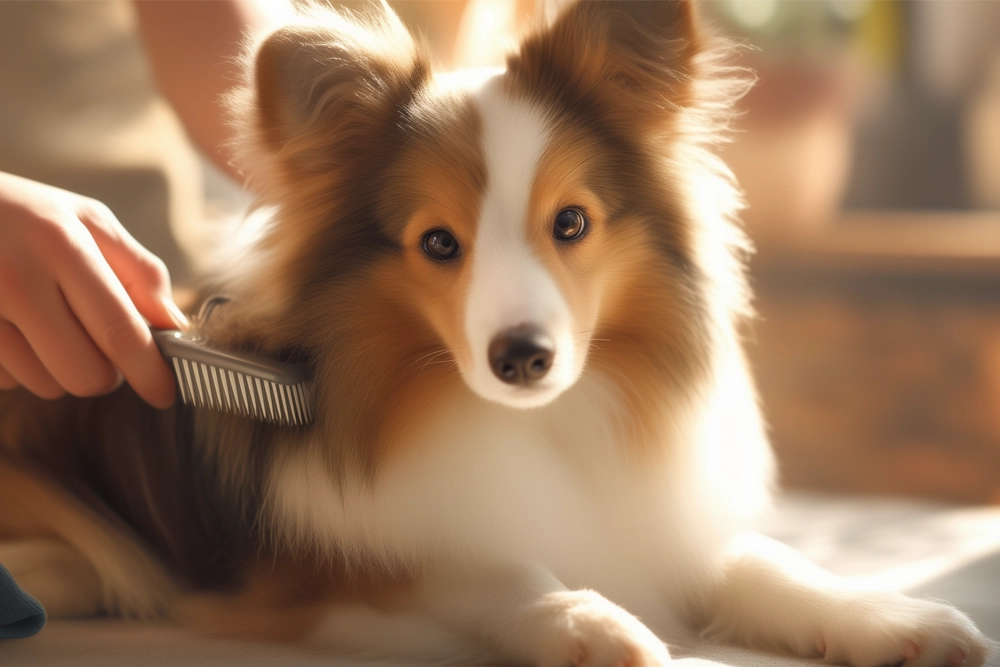
Brushing is an essential part of Sheltie care and all owners need to understand how to groom a Sheltie. Skip grooming and you don't just get more fur on the couch; your Sheltie gets horrible mats in their fur. Mats pull on the skin, trap moisture and debris, and are painful to remove once they form.
I found that deep grooming every 1–2 weeks worked for Howard and Piper year-round, with extra attention at the start of summer as this is when Shelties blow their undercoat. I also did quick brushes behind the ears when I saw trouble brewing. I highly recommend grooming your own Sheltie if you can, as visits to a less familiar person (and especially a stranger) for this routine are stressful to sensitive Shelties. If you do use a groomer, pick someone with a gentle nature and budget for regular visits so your Sheltie doesn't yo-yo between show-ready and felted lamb.
4. Shelties Are Smart and Need a Job
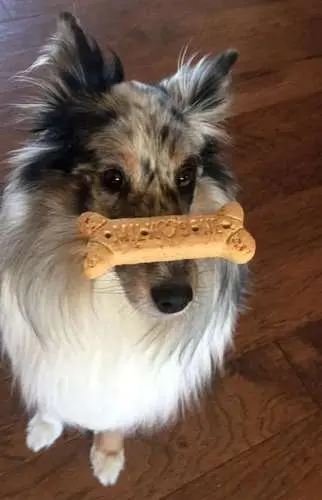
Shelties are famously clever. According to Stanley Coren's book The Intelligence of Dogs, Shelties rank as the sixth most intelligent dog breed. In practice, that meant Howard and Piper could learn new commands in a handful of repetitions... and then start offering the behaviors unprompted just in case there were snacks involved.
Smart dogs are wonderful to live with, but they're also a different kind of responsibility. You need to give a Sheltie's brain something to do every day or they become bored and listless. It can be sniff-driven walks with lots of time to explore, off-lead freedom in safe areas, social time with other dogs and humans, and puzzle-style dog games around the house. If we under-stimulated our Shelties, we paid for it in excessive barking, late night zoomies, and self-imposed guilt trips.
5. Shelties Are Natural Alarm Systems Tuned to 11
On the Shetland Islands, these dogs were selected for attentiveness, intelligence, keen eyes, and alarm barking. Those traits haven't gone anywhere. Modern pet Shelties still feel obliged to report every unusual sound, movement, delivery van, and suspicious pigeon.
The Sheltie isn't a guard dog and is unlikely to attack anyone, but he will absolutely raise the alarm. Piper took this job very seriously. He alerted us to cats, car doors, and even the occasional leaf. Howard was only slightly more selective, but usually chimed in with Piper nonetheless.
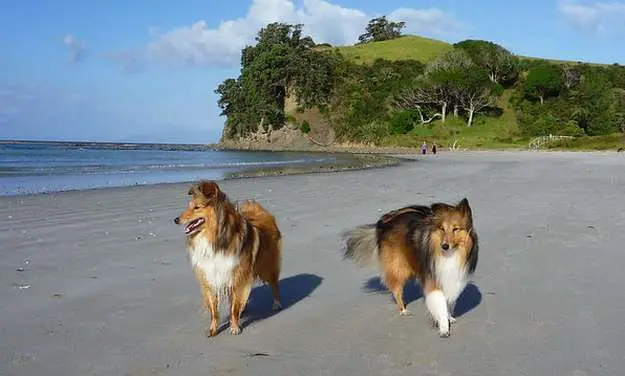
Rather than trying to stop barking completely, we focused on teaching an all-clear signal. Our cue was a calm but firm "ok, shhh" to signify we were aware of the alleged danger and they could relax. To reduce long bouts of random barking, we gave them lots of mental stimulation during the day and extra long beach walks. This made them more settled and relaxed at home so they could spend the rest of the day peacefully judging the world instead of policing it.
For extra brain work, try hiding treats around a room and saying "find it", or training your dog to do simple household "jobs" like collecting toys in a corner, or going to the mat when the doorbell rings. A Sheltie who genuinely feels he has useful work to do is often a more settled dog.

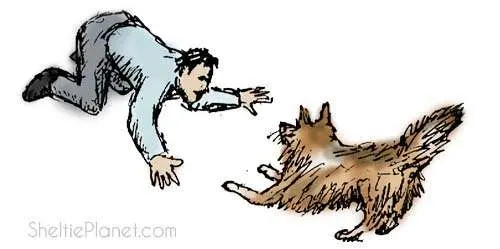
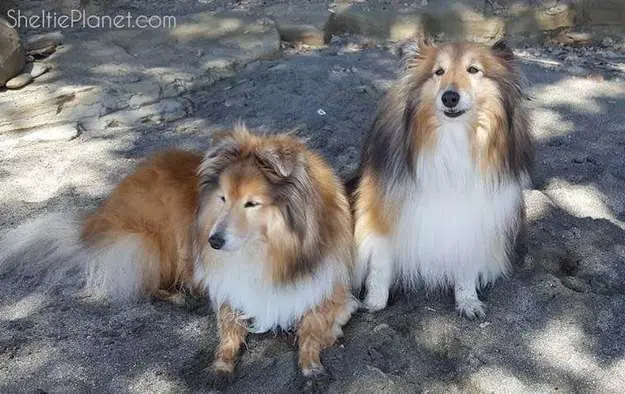
Howard stands to attention.
6. Shelties Don't Just Bark... They Talk To You
Besides alarm barking, Shelties have an entire soundboard of yowls, howls, chirps, and under-the-breath commentary. It's often directed right at you, which makes it very hard not to interpret as conversation.
Some Shelties are more vocal than others. By Sheltie standards, Howard was the strong, silent type. Piper, on the other hand, was our resident singer/songwriter. He literally howled when we let the answering machine pick up messages, although only Piper knows why. Perhaps he thought a tiny human was stuck in the machine. He also sang during yawns and I have him on video saying such words as "rowl", "rarr", and "yah" as if he was trying to talk like a real boy.
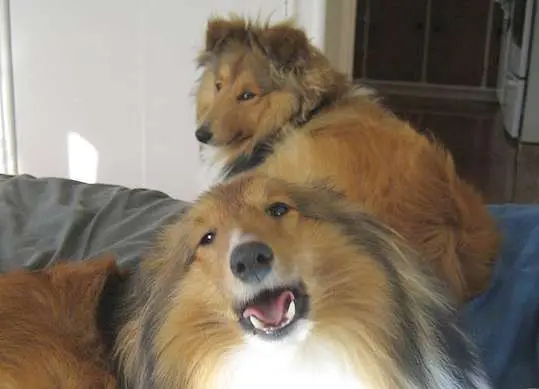
7. Shelties Have a Great Temperament With The Right Start in Life
One of the big reasons people fall in love with Shelties is their temperament. They tend to be loving, loyal, and affectionate, with a soft, sweet expression that matches their personality. Both our boys were classic shadow dogs, happy to follow us from room to room and curl up wherever we settled.
The Sheltie temperament leans toward a submissive nature and a strong desire to please. That sensitivity is a gift when you handle it well: they can read your tone, your body language, and your mood. But it also means they can be easily upset by harsh handling, chaotic environments, or lack of socialization.
An anxious Sheltie can be extremely skittish. Nervousness is often rooted in poor socialisation during puppyhood. Between roughly 4–10 weeks of age, puppies are soaking up information about what is safe. If they don't meet a variety of friendly adults and children, they may grow into dogs who are always on guard.
Expose your Sheltie puppy to different people, gentle children, and everyday situations early on, pairing each new thing with treats and praise. Do that, and he's far more likely to grow into a confident family dog who adores his humans instead of worrying about them.
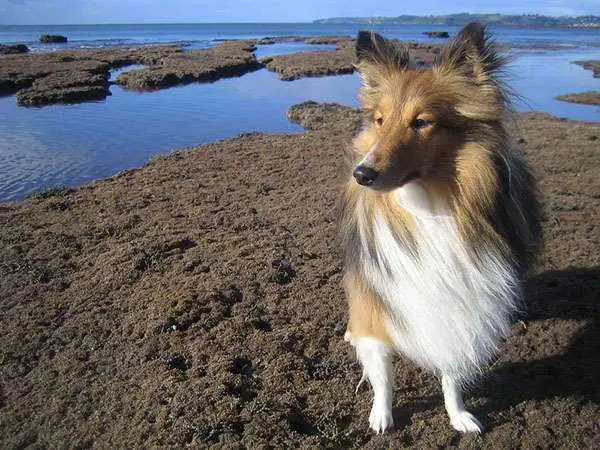
8. Shelties Need Daily Exercise (But Not Marathons)
All dogs love to run, but Shelties have that extra working-dog buzz. Aim for at least 45–60 minutes of outdoor exercise most days. That doesn't have to be a power walk in a straight line; they enjoy wandering, sniffing, pottering, and doing short bursts of speed when the mood strikes.
While some Shelties might classic fetch, many are more herding-minded: they like to chase, circle, and manage moving things rather than retrieve them. Rolling a pebble or a small ball along the beach and watching your Sheltie enthusiastically herd it is very on-brand. They won't necessarily return it, but they will feel extremely satisfied about the fact that they chased it down.
On energetic days, Howard and Piper had explosive zoomies followed by dramatic naps. They weren't built for all-day hikes, but if they didn't get a decent outing, this was their own form of indoor entertainment. On rainy days, we played chase and light wrestling games around the house. We even taught Piper hide-and-seek (he was always the finder, and he always won). A Sheltie who's had a proper outlet for their energy is a much more chilled housemate.
9. Spaying Or Neutering is The Ethical Choice for Pet Shelties
The Humane Society says millions of unwanted dogs are put down each year because of accidental litters and casual pet breeding. Backyard breeding is a catch-all term that describes people who breed pet-quality dogs, without the knowledge, investment, or resources involved in ethical breeding.
Even if we have no intention of breeding our pets, most of us dislike the idea of desexing our fur babies. It can feel wrong, unnatural, and even cruel to put them through the surgery. But the reality is dogs are companion animals bred into a world of dog overpopulation. By desexing your Sheltie, you eliminate the risk of an unwanted litter, reduce frustration and roaming (females in heat give off strong pheromonal cues to intact males), and even prevent certain types of cancers.
Timing is also important, as desexing interacts with hormones and development. We chose to neuter Howard and Piper at around 12 months old, giving their bones time to finish growing before desexing reducing their testosterone levels. Females can be safely spayed slightly younger. Learn all the pros and cons of spaying female Shelties and neutering male Shelties to make an informed decision.
10. Shelties Often Reach 12–15 Years – And The Senior Years Matter
Smaller dogs tend to live longer than larger dogs, and Shetland Sheepdogs often reach 12–15 years. Genetics, diet, exercise, and general care all play a part. One very common issue is subtle overfeeding; an extra few pounds may not sound like much but for small dogs it puts extra strain on joints and organs over time.
The most common causes of death in Shelties, as in many breeds, include cancer, heart disease, and kidney failure. Howard developed congestive heart failure when he was 12 years old, while Piper's heart became severely enlarged at 15 years old and we made the most of our final cosy days together.
You can't control everything, but you can stack the odds in your Sheltie's favor. Keep your Sheltie lean, take care of his teeth, make outdoor exercise part of daily life, and get annual vet checks and immunisations. It's also worth reading up on genetic diseases in Shelties so you can spot early warning signs of the inherited diseases more common in this breed. The senior years can be tender and heartbreaking, but they're also incredibly precious.
Support Sheltie Planet
If you value this free content, please check out my Sheltie-focused Amazon store.
More Articles
How to Groom Your Sheltie at Home
The 6 Sheltie Coat Colors
10 Things to Know About Shelties
52 Shelties Being Ridiculous



10 Most Popular Dog Breeds
How to Stop a Sheltie Jumping
Hear Our Shelties Talk