Pet store puppies conjure ideas of joy and innocence, so it comes as a shock to many that their puppies are often victims of the puppy mill trade.
Puppy mills are commercial dog breeding facilities resembling factory farming. The business model is driven by profit over animal welfare and as a result, multiple dogs are kept in cramped cages for their whole lives, suffering from poor hygiene and nutrition, lack of exercise, lack of vet care, and routine overbreeding.
The horrendous conditions in puppy mills are bad enough. But even once a dog leaves a puppy mill, their troubles are not over. They face lifelong health consequences stemming from their genetic and environmental origins.
The same result can stem from backyard breeding, where pet owners or amateur breeders turn their hand to breeding as a hobby without due consideration for genetic screening, parental temperament, or whether there are homes waiting for their next batch of so-called designer puppies. So please think twice before you visit the pet store and think about where the puppies can from. Here are the real implications of buying a pet store puppy:
1. Pet Store Puppies Often Come From Puppy Mills
When you buy a pet store puppy, you're likely directly support the puppy mill that produced her. Once the pet store takes its profit share, the rest of your money goes into the pocket of the puppy mill operator. And please don't think that you're "saving" a puppy. By putting money back into the trade, you're really condemning more dogs to a life of captivity and overbreeding.
There are 10,000 puppy mills in the US, producing up to 2.6 million puppies every year. The breeding dogs are kept in cramped conditions, are malnourished and poorly exercised, and have a sorry psychological state. Females are wildly overbred, being impregnated every 6-8 months each heat cycle until they are worn out and euthanized.
Responsible dog breeders never sell their puppies in pet stores. It goes against their need to meet prospective owners and ensure suitable homes, keep track of their puppies as they grow, and learn about any health problems later in life.
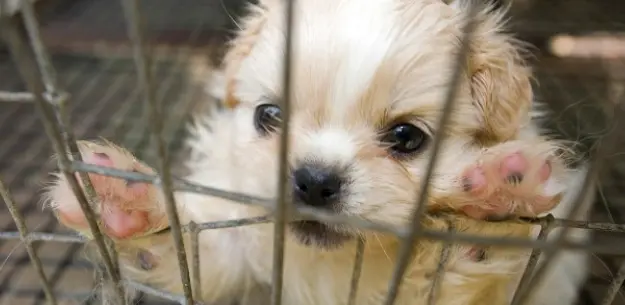
Pet Store Puppies Often Come From Puppy Mills.
2. Pet Store Puppies Often Have Health Issues
Since they usually originate from puppy mills, pet store puppies have spent their entire lives so far in cages alongside many other dogs, raising the likelihood of infectious diseases. Puppy mill operators also themselves the expense of DNA screening which otherwise ensures genetic diseases aren't passed on to puppies. Again, this is strongly the case with backyard breeders.
Genetic testing is an important part of professional dog breeding. When a dog is found to carry disease genes, he is no longer bred. This ensures the survival of healthy blood lines while flushing inherited diseases out of the gene pool.
The end result is that pet store puppies are much more likely to have genetic diseases or susceptibilities, leading to lifelong suffering, expensive vet bills, and even an early death.
3. Pet Store Puppy Guarantees Are Misleading
Many pet store puppies come with a guarantee offering a reimbursement should your puppy develop a serious illness. What this really means is that if your new puppy gets sick, the pet store offers to replace your puppy with an alternate. They euthanize the puppy you have come to love and trade it for another puppy mill victim.
Sometimes they claim that your puppy will grow out of a condition, thereby delaying action until their guarantee has expired. In both cases, they take no responsibility to help you pay the vet bills brought about by irresponsible breeding practices.
4. Pet Store Staff Are Not Dog Breed Experts
Many pet store staff likely know very little about the dog breed they're selling. As much as they may love animals, they're retail specialists and their job is to make sales. They see all kinds of cats and dogs come through their doors and have no responsibility to read up about the specific breeds they're selling.
Compare this to professional breeders, who dedicate their lives to understanding the inherent traits of their chosen dog breed. Expert breeders can help you decide whether their breed is appropriate for your lifestyle based on things like activity levels, social needs, or travel tolerance. They can also teach you how to spot breed-specific health susceptibilities, like hip dysplasia in certain large dogs, and the expected life span.
5. Pet Store Puppies Have Poor Toilet Habits
Pet store puppies have spent most of their life in a cage. They're forced to eliminate in the same area where they eat and play, which is completely against their nature. Unfortunately, once they develop this habit, it can be very difficult to wind back during housebreaking.
What's more, these puppies have little or no experience of being handled by people. There is a critical window for socializing puppies with humans, and missing it often produces anxious dogs who are afraid of everyday interactions with house visitors and people on their walks.
6. Pet Store Puppis Are Poorly Socialized
Pet store puppies are frequently separated from their moms way too young in life, causing long term fear and anxiety. The fact that puppies can be found in pet stores under 7 weeks old is evidence of this.
Studies have found puppy mill dogs have much higher rates of behavioral and psychological problems. They're more likely to be anxious, aggressive, and to run away. These tendencies can be caused by early separation from mom, poor socialization with humans, or the stress to the mother during pregnancy.
7. Pet Store Puppies Are Expensive
Market forces drive higher rates for so-called designer dogs like the Poshie (Pomeranian X Sheltie), Sheltie Tzu (Sheltie X Shih Tzu), or Sheltiepoo (Sheltie X Poodle). The novelty of unusual crossbreeds allows pet stores and puppy mills to charge much more than an expert breeder does for healthy purebred Shelties.

Designer dogs like this Poshie are the lifeblood of puppy mills.
8. Pet Stores Provide No Access to The Puppy's Parents
When you buy a pet store puppy, you have no opportunity to meet his parents. This matters because you want to check on their overall health and temperament, to ensure their offspring has the capacity to be healthy and well-adjusted too.
Meeting the parents also allows you to verify the breed and see what your puppy will look like when he's fully grown. While the pet store may claim they're offering a purebred Sheltie, they're going on what the puppy mill claims. Don't be fooled by official-looking AKC papers as these can be easily falsified.
Final Thoughts
When you're looking to buy a puppy, please avoid the temptation of going to the pet store. Above all else, remember you're not "saving" that one poor puppy; you're adding money to the horrendous puppy mill trade.
Instead of visiting a pet store, first look up a Sheltie rescue near you to adopt an adult dog and forego all the puppy drama. If you have your heart set, look up a professional Sheltie breeder and support the ethical breeding of Shetland Sheepdogs.
If you'd like to take action, read more about what's being done to fight puppy mills at the ASPCA. Tell your friends the truth about pet store puppies and help raise awareness about the proliferation of puppy mills.
Support Sheltie Planet
If you value this free content, please check out my Sheltie-focused Amazon store.
More Articles
How to Groom Your Sheltie at Home

The 6 Sheltie Coat Colors

A Brief History of Shelties

Sheltie Puppy Development

10 Intelligent Dog Breeds

Are Shelties High Maintenance?

Why Do Dogs Smile?