When a new partner, roommate, or family member moves into your home, I guarantee your Sheltie will have an opinion about it.
How you handle the first few weeks will determine whether there's hope for a slow-burn friendship or the whole thing turns into a trainwreck. Here's how to navigate it well.
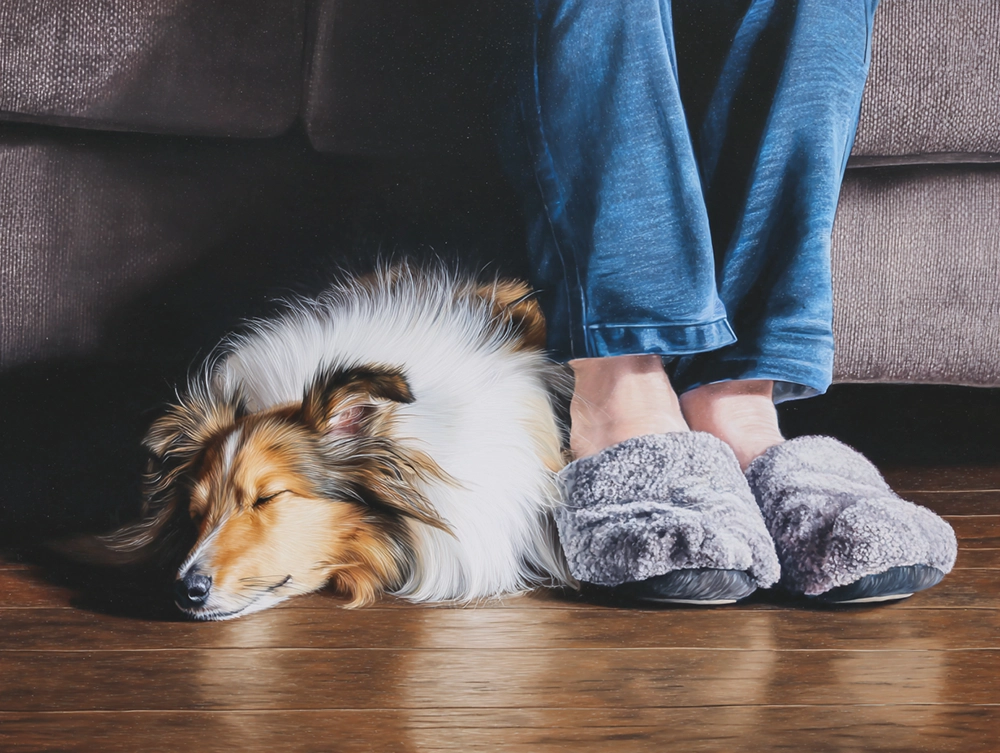
The right roommate can support your Sheltie's wellbeing
1. Brief The New Roommate
Before you manage anyone's expectations, know where your Sheltie comes from. Shelties are highly perceptive dogs, which makes them eerily attuned to your tone, routine, and shifts in energy. That same sensitivity makes a stranger moving into their safe place feel like a significant event, requiring extended observation and commentary. Adjusting to a new person in the house means assessing them continuously and vocally.

Whoever's moving in, your first job is the same: warn the incoming person. Tell them to expect heightened amounts of barking in the beginning. Tell them that's your Sheltie on high alert, and the correct response is calm indifference. Avoid showing the dog any fuss, frustration, or counterproductive showers of "it's okay, it's okay!" (which only confirms to the dog that barking frantically is the right thing to do.) This single briefing delivered in advance can save everyone weeks of stress.
2. Have a Casual Meet and Greet
If your situation allows it, have the new roommate meet your dog in your house for a short, casual encounter (say 20-60 minutes). You're not looking for instant chemistry; that's not how Shelties work and expecting it only sets everyone up for disappointment. Instead, you're looking at how the person responds to barking, whether they follow your lead on handling, and whether your Sheltie's initial wariness softens during the visit.
Sustained, worsening anxiety in your Sheltie is worth taking seriously but doesn't mean it's all over. It just means there's more work to do, namely helping your new roommate understand that their loud voice or aggressive posturing stresses your Sheltie. What you're most likely to see is your Sheltie bark, circle, retreat, and then when the energy has settled, creep forward to sniff a hand. If your new roommate doesn't scare them off, your Sheltie will file them under: pending, probably fine. It's the beginning of something workable.
If an advance meeting isn't possible, such as an au pair arriving from overseas, or a distant family member moving in under short notice, you need to make that first meeting on move-in day as relaxed as possible. Keep it positive but low-pressure. Treats help enormously. Your Sheltie's herding brain wants to direct people's movements, so let your dog approach on their terms rather than forcing any contact.
3. Establish a Routine
Dogs thrive on routine and Shelties, with their particular investment in knowing what's supposed to happen and when, thrive on it more than most. One of the most destabilizing things about a new person in the home isn't necessarily the person themselves but the knock-on effect on the household schedule.
Consider the boarder who works unusual hours and crashes around the kitchen at night. The new partner whose morning rhythm is to get up three hours earlier than you. Stepchildren who visit on weekends and bring with them an abundance of energy and noise. These are all are manageable situations but disrupt your Sheltie less when you've thought them through in advance and done what you can to reduce the impact, rather than scrambling to re-stabilize your dog after the fact.
There are a handful of things you can lock down easily, like feeding times, walking times, an afternoon siesta, and a bedtime wind-down. These don't have to be military-precise, but they should follow a recognizable rhythm for your dog even when the human composition of the household is in flux. If the new person is going to be involved in any of these routines, establish a strong consistency from the start.
4. Protect Your Dog's Safe Space
Shelties need a place that is guaranteed their own. The dog bed isn't just theirs in principle but enforced in practice, which matters most when children or other animals are involved. Kids are often wonderful with Shelties, and vice versa, as long as the rules are clear. No chasing, no cornering, no rough handling. Let the dog retreat when needed. Don't approach when they're in their safe space (likely to be a dog bed, crate, or under a table). This area must be 100% off-limits so your Sheltie can retain a sense of safety around unfamiliar newcomers.
With adults, your main job is noise control. Your Sheltie is already processing the stress of a new person in the house and doesn't need loud music through the walls or a wild housewarming party to contend with. You're not asking your roommate to live in silence but rather respect your dog's needs which will be greater during the first few weeks of co-living. Again, making them aware of this up front means it's not a shock to anyone.
5. Take Daily Walks Together
The fastest way to get your Sheltie on board with a new person is for them to join you on dog walks. There's something about moving through the world together that accelerates dog-human bonding. If there are treats present, all the better. Encourage your new person to walk with you and your Sheltie in the early weeks to compress the trust-building timeline significantly.
For live-in help specifically, this investment pays back even greater when you leave the house. A Sheltie who has genuinely bonded with an au pair won't suffer from separation anxiety with a second trusted human in the picture.
6. Set Clear Expectations Between the Humans
Shelties are exceptionally good at identifying which humans have the softest rules and thus conduct their lives accordingly. Any inconsistency in how people handle your Sheltie will be cataloged and exploited. Does the new person feed them from the table? Begging increases. Do they leave dirty socks on the floor? Sock theft rises.
Before a roommate moves in, talk through the non-negotiable rules you've already established with your Sheltie. These may even be unspoken rules you've developed on autopilot. Consider:
- How do you respond to barking?
- Is your Sheltie allowed on the couch?
- Do you feed them table scraps?
- What do you do when your dog is sick?
- Where do you keep the leash and treats?
- Where is your local vet clinic?
Some of these rules apply to all dogs, not just your Sheltie. Your new roommate needs to know what foods are toxic to dogs before they accidentally poison your Sheltie with table scraps. They need to know that vomiting is a cleanup job, while vomiting and loss of balance is a vet emergency.
If you haven't yet found your housemate, start your search within a pool of dog-friendly people, rather than ones who are merely dog-tolerant. For instance, you can find roommates in Miami that specifically like dogs on platforms like SpareRoom. This forward-planning approach helps ensure both you and your Sheltie end up in a more supportive living environment.
7. Watch for Signs of Success
How will you know when your Sheltie accepts your new roommate? The adjustment period looks different for every dog but you'll know you're there for sure when your Sheltie:
- Stops barking at the boarder every time they enter the room.
- Settles down on the lap of your new roomie on the sofa.
- Greets the nanny with enthusiasm when they arrive home.
- Lies down on the floor near where your stepchild is playing.
None of this happens on day one. It's likely to start hectic or at least a little tense for your Sheltie. Over the course of a few weeks, things will fall into place as long as you've laid your groundwork. Remember, the goal isn't instant adoration but a household where your dog feels secure, their routine remains intact, and your roommate understands enough about Shelties not to undermine any of that. When it clicks, it genuinely improves everyone's lives—most of all, your wonderful little Sheltie.
Support Sheltie Planet
If you value this free content, please check out my Sheltie-focused Amazon store.
More Articles
How to Groom Your Sheltie at Home

The 6 Sheltie Coat Colors

Caring for a Sheltie

Sheltie Puppy Development



33 Medium Sized Dog Breeds

Socializing a Shy Sheltie

Why Do Dogs Smile?