Shelties with sensitive guts may suffer health problems on even the most nutritious dry kibble. If your Sheltie suffers from recurring skin flare-ups, soft stools, or picky eating habits, trialing an organic wholefood diet is well worth your time.
Fresh and human-grade dog food has moved beyond the fringe. It's a legitimate option for dog owners who want maximum ingredient transparency, and for sensitive Shelties, the case for it is stronger than with most breeds. We're talking organic, whole foods cooked gently and without high levels of processing.

The Sensitive Sheltie
Shelties are a finely-tuned breed in more ways than one. The gut is the second brain—and that nervous, always-alert temperament can also show up as sensitive guts. Food intolerances, coat issues, and chronic loose stools often trace back to an ingredient that's been irritating the gut lining for months. If you're dealing with:
- Recurring food sensitivities
- Elimination diets for allergies and intolerances
- Digestive issues with no obvious cause
- A picky eater who prefers fresh table scraps
...then human-grade fresh food is worth exploring seriously. However, this isn't for everyone. If your dog is thriving on a quality dry kibble like Hill's Science Diet or Blue Buffalo, there's likely no reason to change. This comes down to your dog's individual health, food preferences, and quality of life.
Isolating Gut Sensitivity Triggers
Let's assume you're not feeding your Sheltie any of these 30 toxic dog foods, some of which are deadly, and some of which can sneakily irritate the gut long-term. So if it's not table scraps or the neighbor's vegetable patch, what's triggering your Sheltie's gut?
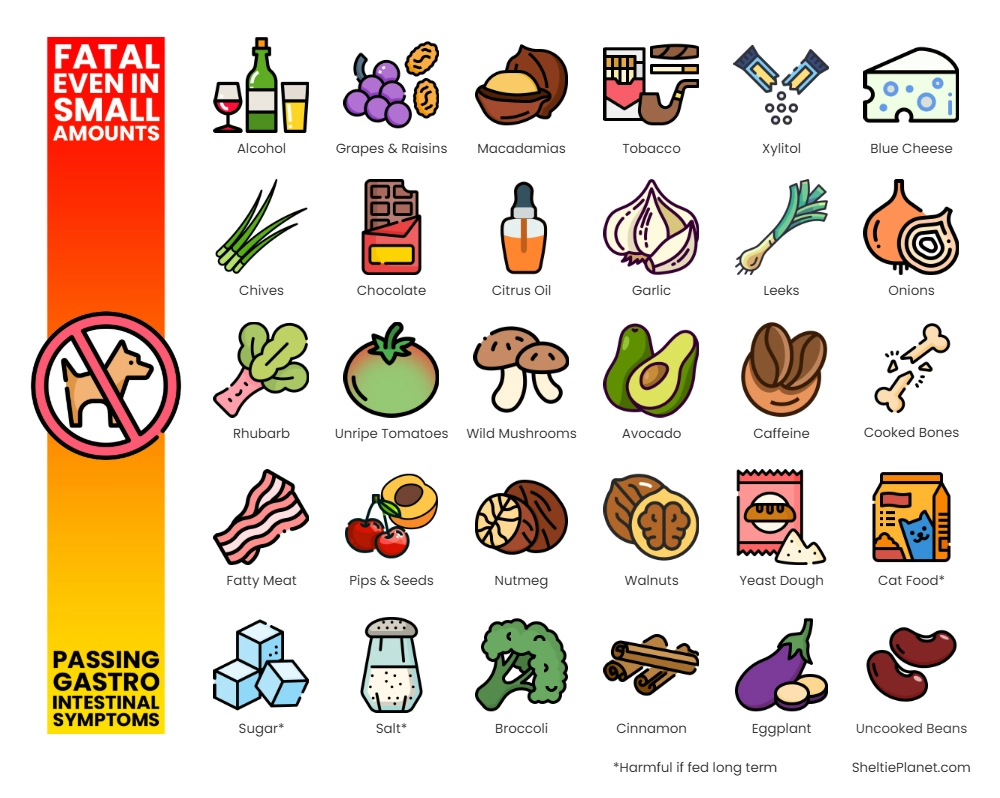
Download this free PDF poster and put it on the fridge for family and guests.
The truth is, it could be the kibble. Even premium brands, thanks to the nature of kibble production, which involves high temperature cooking and processing. Kibble ingredient lists can be long, vague, and difficult to parse. Meat meal, poultry by-products, and synthetic additives all have the potential upset your dog's gut. But isolating the exact causes is difficult. A good way to cut through the noise is to trial a fresh food diet built from whole food ingredients.
Organic Dog Food
California Dog Kitchen was founded by two California brothers who adopted a dog named Lluvia (pronounced yoo-vee-uh) and hit an immediate wall with dry food. Every kibble they tried gave her the same cluster of problems: bad shedding, red rashes, and constant digestive issues. Sound familiar?
Rather than continuing to cycle through dry kibble brands, they started cooking fresh food for her instead. Her health soon turned a corner. That year, in 2020, they consulted vet nutritionists to make sure their recipes were complete. Then they launched their very own organic dog food brand, with Lluvia signed on as the official taste-tester.
Lluvia was a rescue dog, many of which can have uncertain starts to life, anxiety issues, and digestive systems that never quite settle. I've heard of rescue dog owners who wind up cooking chicken and sweet potato late at night because it's the only thing that agrees with their dog. California Dog Kitchen is for those dedicated owners looking for fresh, whole foods for their dog without the production hassle.
The Ingredient List
Protein sources are the headline here. The CDK range includes wild-hunted venison, wild-caught fish, certified organic chicken, and Australian lamb. These are the kinds of clearly identified, single-source proteins that make an elimination diet straightforward so you know exactly what your Sheltie is eating.
The food is cooked gently and then frozen rather than extruded at high heat and dried, all of which matters for nutrient retention. It meets AAFCO nutritional standards for all life stages.
"Human-grade food or whole food, that is gently cooked, can provide a high level of nutrients and hydration for your dog." - Dr. Nell Ostermeier, licensed veterinarian
California Dog Kitchen is also accepted into the Good Food Guild, which confirms their sourcing practices and ingredient transparency. Their chicken is GAP-certified organic and their meats USDA-certified. Their food is in 150 stores across the US, which is a supply reliability worth noting for long term consistency.
The Practical Side
Despite the growing popularity of fresh dog food, the cost is often greater than dry kibble; that's the unavoidable reality. It also requires freezer space and planning ahead for cold deliveries or store pickups. Hopefully, these trade-offs are worthwhile for the improvement in your dog's health and behavior.
Vet perspectives continue to emphasize that no single diet fits every dog. Factors like age, activity level, medical history, and individual tolerance all influence dietary needs. For Shelties, whose energy demands can vary widely depending on lifestyle, flexibility in feeding is key.
Experts also caution that dietary changes should be made gradually to avoid digestive upset. Take the transition slow by introducing the new food little by little over at least a week, blending it with existing food. Then watch for changes in stool consistency and energy levels before committing fully.
For more ideas on supporting your Sheltie's gut through dietary transitions, see Gut Health in Shelties: Probiotics and The Microbiome.
Support Sheltie Planet
If you value this free content, please check out my Sheltie-focused Amazon store.
More Articles

How to Groom Your Sheltie at Home

The 6 Sheltie Coat Colors

What to Ask a Sheltie Breeder

Clicker Train Your Sheltie



8 Dog Breeds Similar to Shelties

Cool Games for Shelties

The Pros and Cons of Neutering