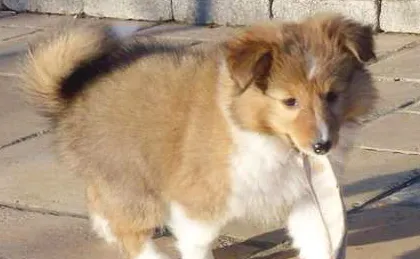
Some Shelties develop a serious fear of leash walking, creating neurotic behavior when it's time for a walk. Here are 7 steps to overcome her fear of the leash.
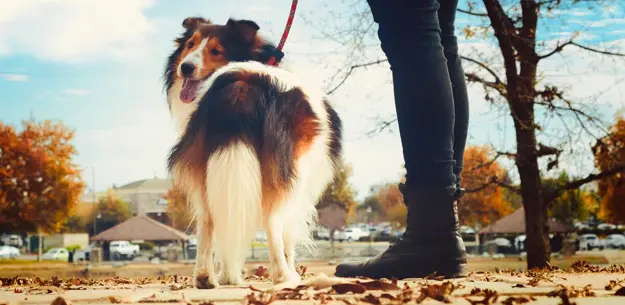
Nervous Shelties are more prone to developing fears and phobias.
What Causes a Fear of Leash Walking?
Often, the sight of the leash is enough to bring on a fit of joy in a dog. For some dogs though, the leash creates fear and submissiveness more than anything else. And since some Shelties can be very nervous dogs, it can be more common for phobias to develop.
This learned behavior can develop if the leash was used in a negative way with a previous owner. It may have been used to drag the dog around, or even confine her for hours at a time. In extreme cases, dogs may have been whipped with the leash as punishment. But sometimes fears can simply develop if your Sheltie is just very highly strung, making her to develop fearful associations which deepen into phobias.

Although fear of the leash can have a severely negative impact on your dog walks, the good news is that it's relatively straightforward to cure. You just need patience and the desire to help your Sheltie overcome this negative association.
What You Need
A 5-foot dog leash. Preferably made of nylon webbing or leather. About 5 feet (1.25 meters) is a good length for Shelties, as it enables control without risk of her getting tangled up. Avoid chain-link leashes as they're heavy, jangle noisily, and hurt if they flick your dog in the face, giving her more reason to be fearful.
A Dog collar. Again, leather or nylon webbing is best. If you're using a collar with a snap-lock, make sure it's safety-approved which ensures it won't come undone under pressure. Avoid slip-chain collars (also known as choke chains, chokers or check chains) as they exert more force on the neck which won't help desensitize your Sheltie's fear of leash walking. Choke chains are a training tool best left to professionals and should never be left on an unattended dog.
How to Leash Walk Your Sheltie
The process involves accustoming your Sheltie to the leash a little bit at a time, keeping her well within her comfort zone every step of the way. Expect her to be wary and nervous at first; this is ok. But stop if she displays signs of extreme fear: hyperventilating, excessive drooling, submissive urination, or rolling eyes.
Step 1 - Leave The Leash Around The House
If your Sheltie is extremely afraid of the leash, accustom her to it very, very slowly. At first, just leave it out in full view around the house, preferably in places with positive associations like next to her food bowl and in play areas.
Step 2 - Interact with The Leash Together
Once she's stopped reacting to the simple sight of her leash, actively involve the leash in daily routines. Wrap it around your hand as you pet her lovingly, hold it when you prepare her food, and play with it while she sits on your lap.
You may see a rise in nerves as the leash becomes a more active part of your play, but with the positive associations, your Sheltie will soon relax in its presence. Remember, you're aiming to accustom her to the leash in a way that's positive and comfortable; rushing the process at this stage is only going to be counterproductive.
Step 3 - Attach The Leash to her Collar
When your Sheltie is ok with the leash touching her, the next step is to attach it to her collar. Tell her to sit and stay, and gently clip the leash on. Don't hesitate, flinch, or make a big deal out of it, as your Sheltie is very sensitive and takes emotional and psychological cues from you. If you act as though it's a safe, simple exercise, she'll more willingly follow your lead.
Step 4 - Let Her Move with The Leash Hanging Freely
Once the leash is on, give her some time to get used to the sensation of something hanging off her neck. She may get a little panicky at this stage, perhaps pawing at her neck and trying to pull the leash off along the ground. Her reaction will depend on the nature of her fear and how past negative experiences have shaped her relationship with the leash.
If she becomes nervous, distract her with a game like tug-of-war or fetch, or let her out into the yard (still, with the leash hanging freely from her collar).
Step 5 - Repeat and Reinforce
Take the leash off after five minutes or so and praise her lavishly for being such a good dog. Give her a couple of tasty treats and lots of attention. Repeat this exercise once a day for several days times before progressing to the next step. You want to give her plenty of opportunities to get used to the sensation of the leash on her collar before you use it to control her walking.
The more positive associations she forms with the leash through the games, treats, and attention while wearing it, the better her progress will be at the next stage.
Step 6 - Practice Obedience Training with the Leash On
Now it's time for a short obedience training session while she's wearing the leash. Five minutes is plenty. Practice the sit-stay command and the recall command while she's wearing the leash (but you're still not holding it to control her). This reinforces your authority and leadership, reminding her that she's still expected to obey you while wearing the leash.
Step 7 - Go for a Short Leash Walk
When your Sheltie obeys your commands with the leash on, you can take her for a short walk while she's wearing it. Take hold of the leash and lead her very gently around the house or yard, with lots of verbal encouragement and positive praise. If she accepts this, well done! In your next leash walk, you can gradually increase your pace of walking, and then the length of your walk.
However, if your Sheltie becomes excessively nervous and jumpy, don't reinforce the behavior by rewarding her with attention. If this happens, stay silent, look ahead, and walk slowly so as not to pull or drag her. Remember, she takes her emotional cues from you, so keep calm and wait for her anxiety to pass.
If she's still highly anxious after several minutes, return to the step where she was last comfortable. You may have rushed to this step, or she may be far more fearful than you realized. Just take everything slower, building that positive association with the leash before you restrict her with it. Spend more time with the leash handing freely from her collar, or go back to simply playing with the leash in your hands. You will conquer your Sheltie's fear of leash walking given time.


Freeze-Dried Beef Liver Treats, Single Ingredient, High Protein, 17.6 oz
Shop Amazon >

Air Dried Salmon Sticks Dog Treats, Real Meat, Made in the USA, 10oz
Shop Amazon >

ARK NATURALS Protection+ Brushless Toothpaste, Dog Dental Chews for Small Breeds
Shop Amazon >

Blue Buffalo Dental Bones, Mini Natural Dental Chews for Small Dogs (5-15 lbs)
Shop Amazon >